When Every Second Counts: A Life Saved Through Teamwork
On September 18, 2025, what began as an ordinary afternoon quickly turned into a fight for life.
Jason Eakins was driving home from a job in Port O’Connor when his work truck veered off the highway at full speed and came to rest in a water-filled ditch following recent rains. Employees from DOW Seadrift, returning from lunch, witnessed the accident and immediately stopped to help. What they discovered was not simply a motor vehicle crash, Jason was unconscious, not breathing, and had no pulse. He was in cardiac arrest.
Without hesitation, one bystander called 911 and alerted DOW Seadrift’s Emergency Services team as others worked together to pull Jason from the truck and immediately begin CPR.
DOW’s Emergency Services & Security team arrived within minutes. An automated external defibrillator (AED) was quickly deployed, and a lifesaving shock was delivered. Chest compressions continued as responders established an airway and provided breaths using a bag valve mask. Jason regained a pulse, lost it again, and regained it once more. Calhoun County EMS arrived on scene, and assumed care. Jason was transported 15 miles to Memorial Medical Center in Port Lavaca, continuing to receive advanced resuscitation as he went in and out of cardiac arrest during the trip.
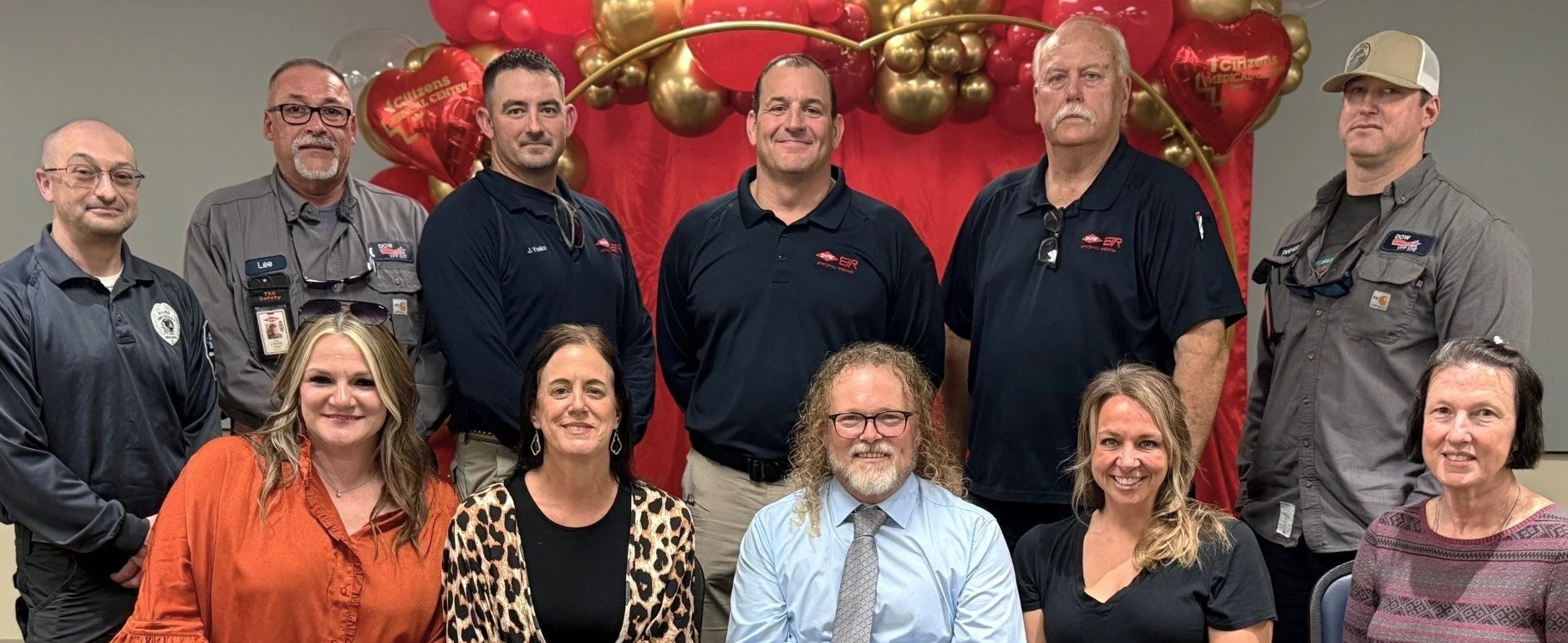
DOW Seadrift Team
John Weitz, DOW Seadrift Supervisor, said preparation and teamwork played a critical role in the outcome. “Our employees recognized immediately that this was a medical emergency and began CPR without hesitation,” Weitz said. “Within minutes, trained responders were on scene with the equipment and experience to intervene. From clear communication to seamless coordination with EMS, everyone understood their role. A difference of even a few minutes could have meant a very different outcome.”
At Memorial Medical Center, emergency department physicians and staff worked quickly to stabilize Jason. It was there that medical teams confirmed he was experiencing a heart attack.
Recognizing the urgency of the situation and the need for specialized cardiac intervention, Memorial Medical Center contacted Citizens Medical Center in Victoria to activate the STEMI heart team. Once stabilized for transport, Jason was urgently transferred to Citizens Medical Center, where the cardiac catheterization lab team was assembled and ready upon his arrival. He was taken directly for definitive treatment to restore blood flow to his heart, a critical step in limiting heart damage and improving survival. He was later admitted to the intensive care unit to begin his recovery.
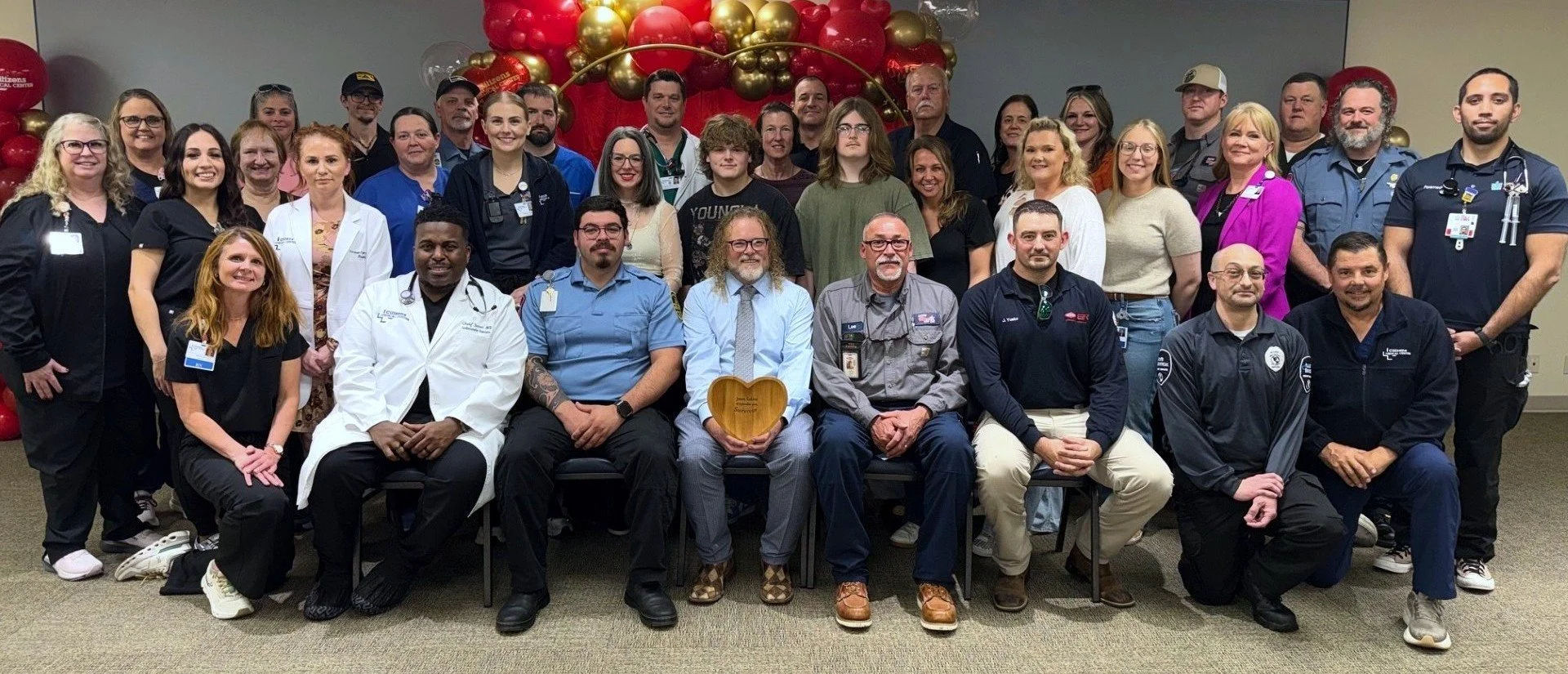
Months later, Jason stood face-to-face with the many people who helped save his life. Citizens Medical Center recently hosted a special reception honoring everyone involved in his care, from the bystanders who initiated CPR, to EMS professionals, to hospital physicians and nurses who provided treatment.
“It’s amazing to see all the people involved,” said Jeremy Winton with Calhoun County EMS. “When we drop the patient off, we never know the 30 to 40 more people who care for them.”
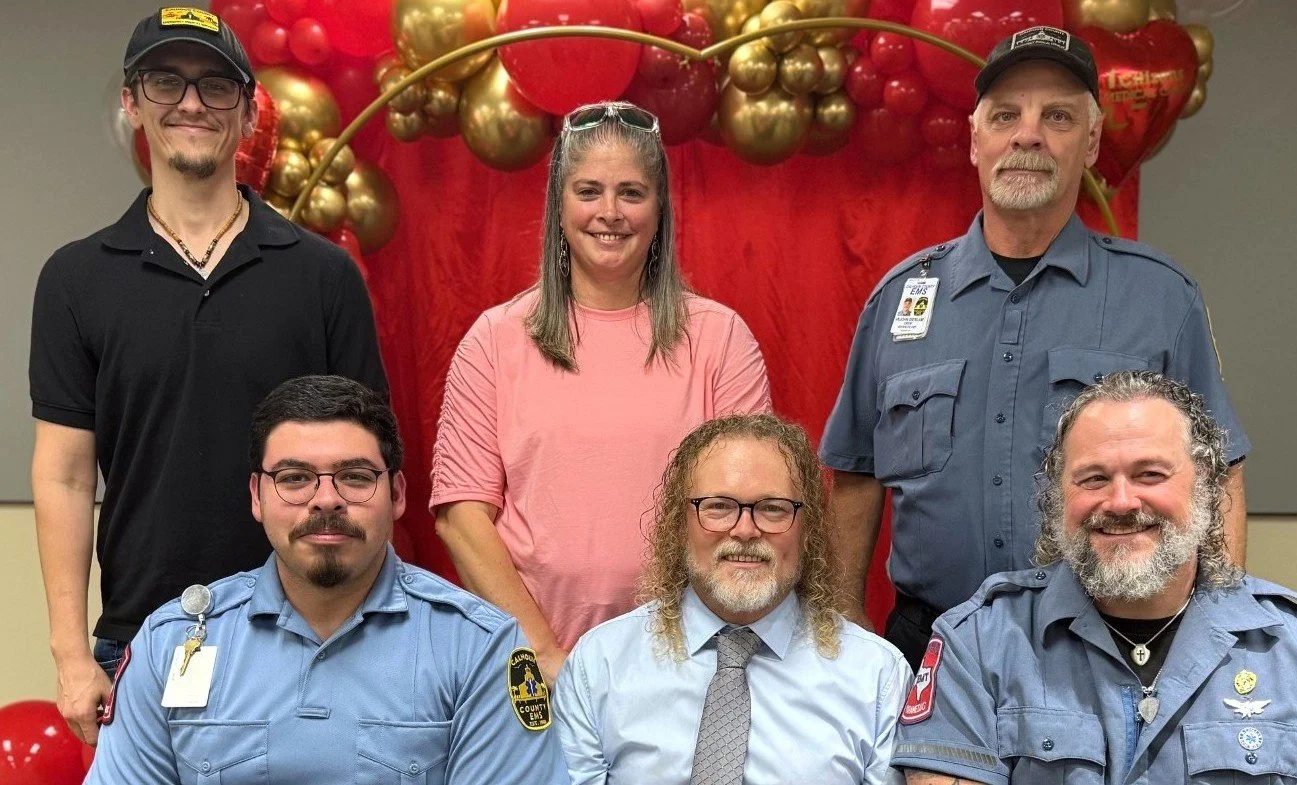
Calhoun County EMS Team
Addressing the crowd of rescuers, Jason shared a simple but powerful message: “For all of your sacrifice, thank you all.”
Jason’s story is a powerful example of what medical professionals call the Chain of Survival, a series of critical steps that must happen quickly and seamlessly to give cardiac arrest patients the best possible chance of survival. Early recognition, immediate CPR, rapid defibrillation, advanced EMS care, and comprehensive hospital treatment must align.
“The importance of having a strong Chain of Survival was evident in this patient’s case, where each step was perfectly aligned,” said Krysta Zavesky, Cardiovascular Care Coordinator and Regional Cardiac Chair at Citizens Medical Center. “DOW recognized the cardiac arrest early, administering CPR and defibrillation. Memorial Medical Center and Citizens Medical Center then provided advanced resuscitation, post-cardiac arrest care, and comprehensive recovery and survivorship support. This seamless coordination at every stage significantly contributed to the patient’s positive outcome.”
Dr. Chelif Junor, Interventional Cardiologist at Citizens Medical Center, was the physician who identified and treated the 100% blockage in Jason’s heart artery, the root cause of his heart attack and cardiac arrest. Working with the Citizens Cardiac Cath Lab team, Dr. Junor performed an emergency procedure to open the completely blocked vessel and place a stent to restore blood flow to the heart muscle.
“When I learned that early bystander CPR and early EMS care had been provided, I was optimistic about his chances for recovery,” said Dr. Junor.
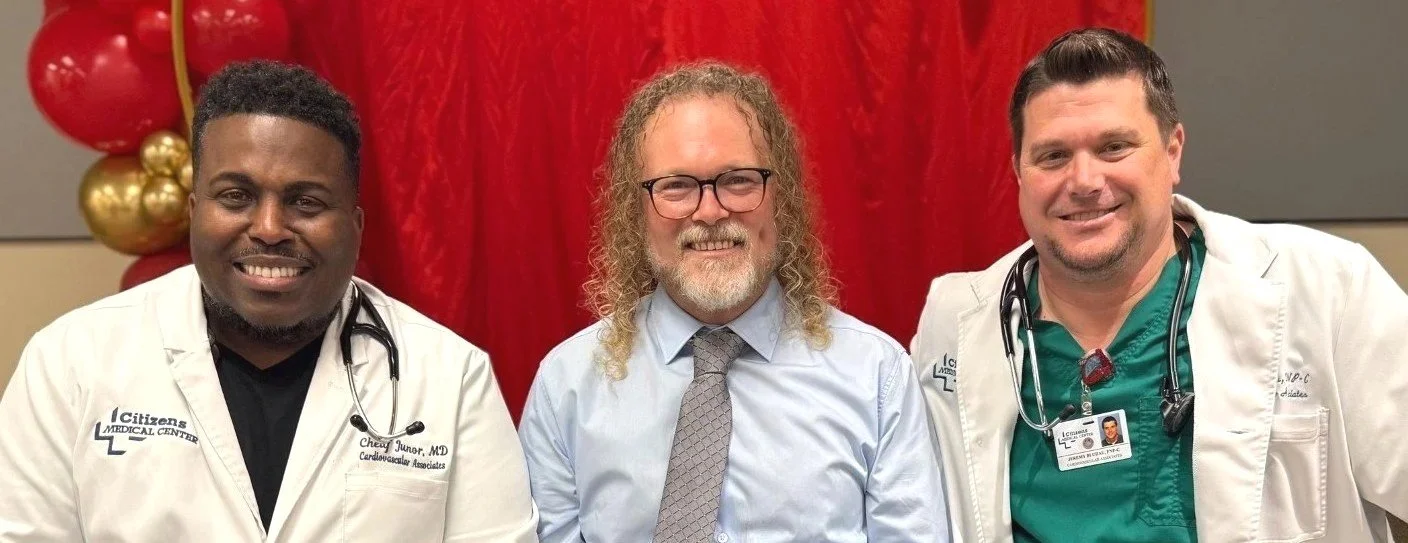
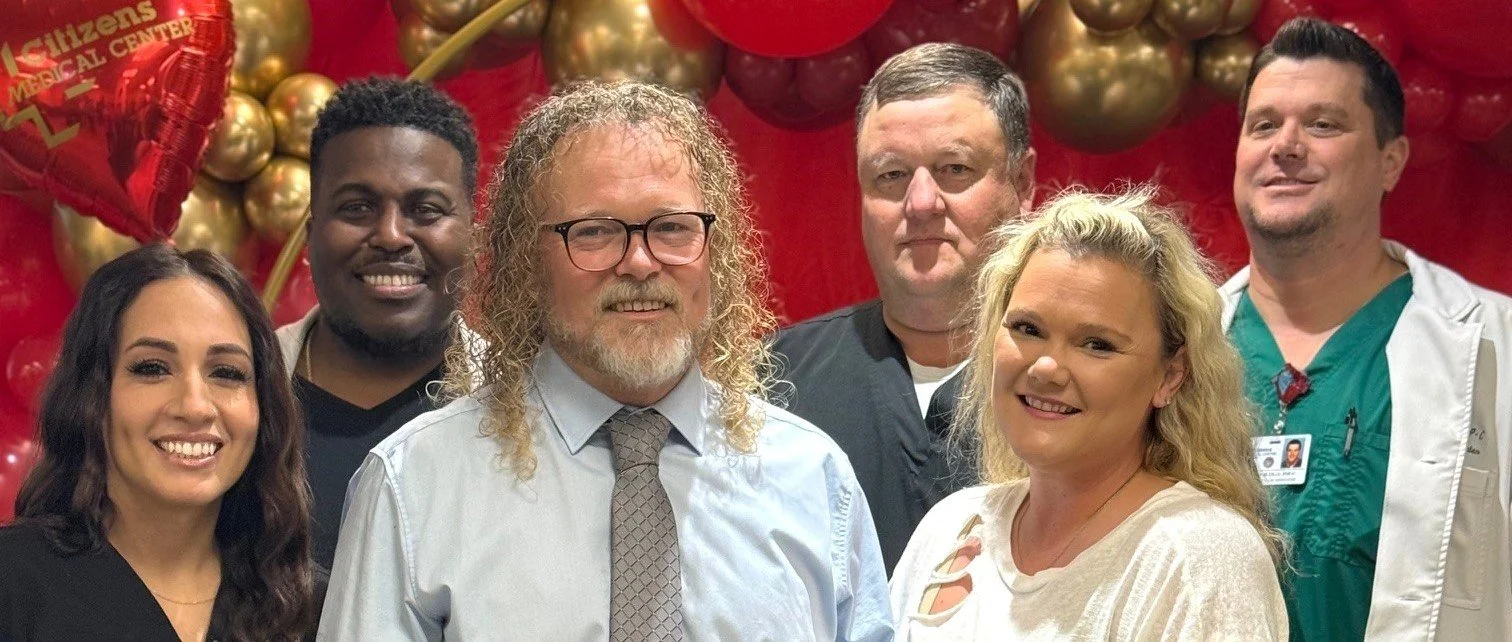
Dr. Chelif Junor, Interventional Cardiologist, Cardiac Survivor Jason Eakins, and Jeremy Bludau, FNP-C
According to the American Heart Association, immediate CPR can double or even triple a cardiac arrest victim’s chance of survival. Brain damage can begin within four to six minutes without oxygen. In Jason’s case, CPR was initiated within minutes of collapse, and defibrillation was delivered rapidly, giving him a fighting chance before he ever reached the hospital.
To streamline cardiac care across the region, Citizens Medical Center fosters strong relationships with regional EMS agencies and hospitals, ensuring that every link in the chain is optimized for survival. Every STEMI heart attack case is reviewed, and feedback is provided to those involved as part of the hospital’s quality improvement program. This ongoing collaboration ensures alignment with the most current American Heart Association and American College of Cardiology guidelines of care.
Jason was experiencing a heart attack that led to sudden cardiac arrest, a reminder that heart disease can affect anyone, regardless of age. Common heart attack symptoms include chest discomfort or pressure, pain in the arm, neck, jaw, or back, shortness of breath, nausea, lightheadedness, and cold sweats. Time to treatment is critical, and early intervention significantly impacts survival and recovery.
Medical professionals emphasize one vital message: call 911, do not drive yourself to the emergency room. Calling 911 ensures immediate medical attention. Emergency responders can begin lifesaving treatment en route to the hospital, dramatically reducing the risk of permanent heart damage or death. Minutes matter.
Jason’s survival was not the result of one heroic act. It was the result of dozens of people, coworkers, strangers, EMTs, nurses, physicians, technicians, each doing their part without hesitation.
His story stands as a testament to preparation, partnership, and the power of early action.
When every link in the chain is strong, lives can be saved.